-
About Us

-
-
Production Strength
-
Blog

What is yarn twist and twist direction?
Release time:
2024-09-23
The twist direction of full matte yarn has a great influence on the appearance and feel of the fabric. Using the twist direction of the warp and weft yarns to match with the fabric organization, the fabrics with different styles of appearance and feel can be woven.

Twisting is the relative rotation of the two cross-sections of the yarn, when the fibers in the yarn that were parallel to the yarn axis are inclined into a helix. For short fibers, twisting is mainly to improve the strength of the yarn. The twisting of filament yarns can both improve the strength of the yarn and produce a certain effect. How much the yarn is twisted and how the yarn is twisted in the fabric in conjunction with the degree of twist has a greater effect on the appearance and performance of the product.
Indicators of the nature of twisting are: the degree of twist, the twist coefficient and the direction of twist, which indicates the degree of twist.
Twist The twist angle of the yarn is twisted one turn for one twist back. The number of twists per unit length of yarn is called twist. China's cotton yarn using special number system of twist, that is, with 10 cm yarn length within the number of twists expressed; combed wool and chemical fiber filament yarn is used in the metric system of twist, that is, the number of twists per meter within the number of twists; in addition, there is also the number of twists per inch within the number of twists expressed in the British system of twist.
Twist coefficient of twist can not be used to compare the degree of twisting of different thick and thin yarns, because the same twist, thicker yarn fiber tilt is greater than that of fine yarn. In practice, the twist factor is often used to indicate the degree of twisting of the yarn. The coefficient of twist is a relative value that indicates the degree of twisting of the yarn in combination with the line density, and can be used to compare the degree of twisting of different thick and thin yarns. The coefficient of twist can be calculated based on the twist of the yarn and the linear density of the yarn.
Twist direction The twist direction refers to the direction of inclination of the fibers in the single yarn or the single yarn in the strand after the yarn is twisted. It is divided into two kinds: Z-twist and S-twist. After twisting, the twist direction of the yarn tends to the upper-left corner from the lower-right corner, and the inclined direction is consistent with the middle of the “S”, which is called the S twist or smooth hand twist; the twist direction of the yarn tends to the upper-right corner from the lower-left corner, and the inclined direction is consistent with the middle of the “Z”, which is called the Z twist or backhand twist. Generally, Z twist is often used for single yarns, and S twist is used for strands.
The twist direction of the strand is indicated by the twist direction of the successive twists. For example, if the single yarn is Z-twisted, the initial twist is S-twisted, and the re-twisted strand is Z-twisted, the twist direction is indicated by ZSZ.
The twist direction of full matte yarn has a great influence on the appearance and feel of the fabric. Using the twist direction of the warp and weft yarns to match with the fabric organization, the fabrics with different styles of appearance and feel can be woven.
REAL-TIME NEWS
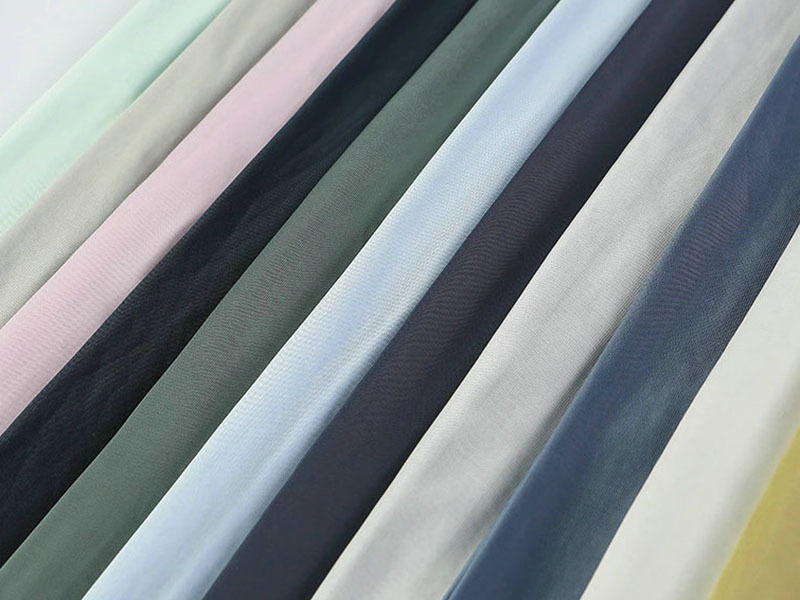
Dyeing methods for nylon yarns mainly include pretreatment, immersion dyeing and jet dyeing, etc. The specific choice of which method depends on the required dyeing effect.
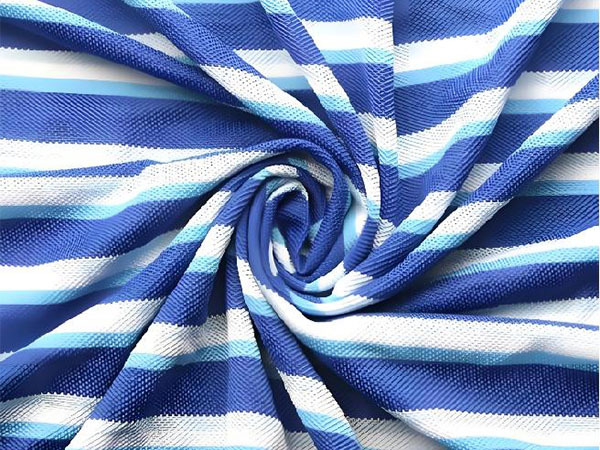
What cotton yarn is suitable for weaving
Cotton yarn is suitable for weaving home accessories, towels, clothing and so on.



WeChat official account
WeChat Mini Program
Nantong Chameleon Dyeing and Printing Co., Ltd.

E-mail:phishion2021@163.com
Address: No. 189 Jiangda Road, Tongzhou Bay Textile Industrial Park, Nantong City